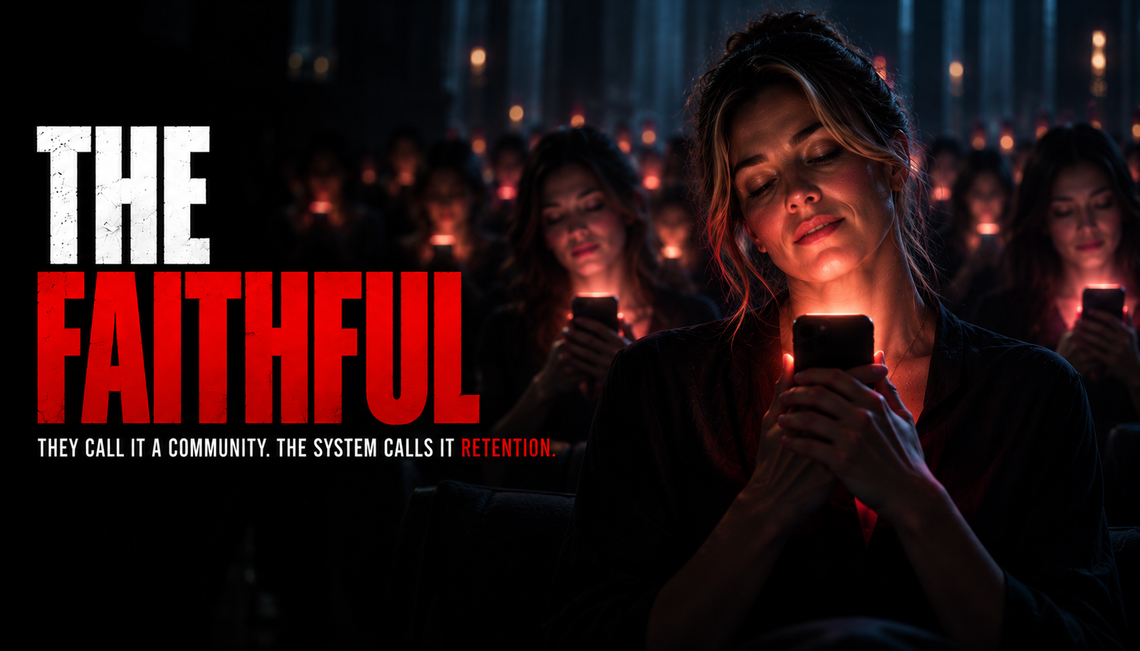
EP11: THE FAITHFUL
They call it a community. The system that built it calls it retention.
The AI
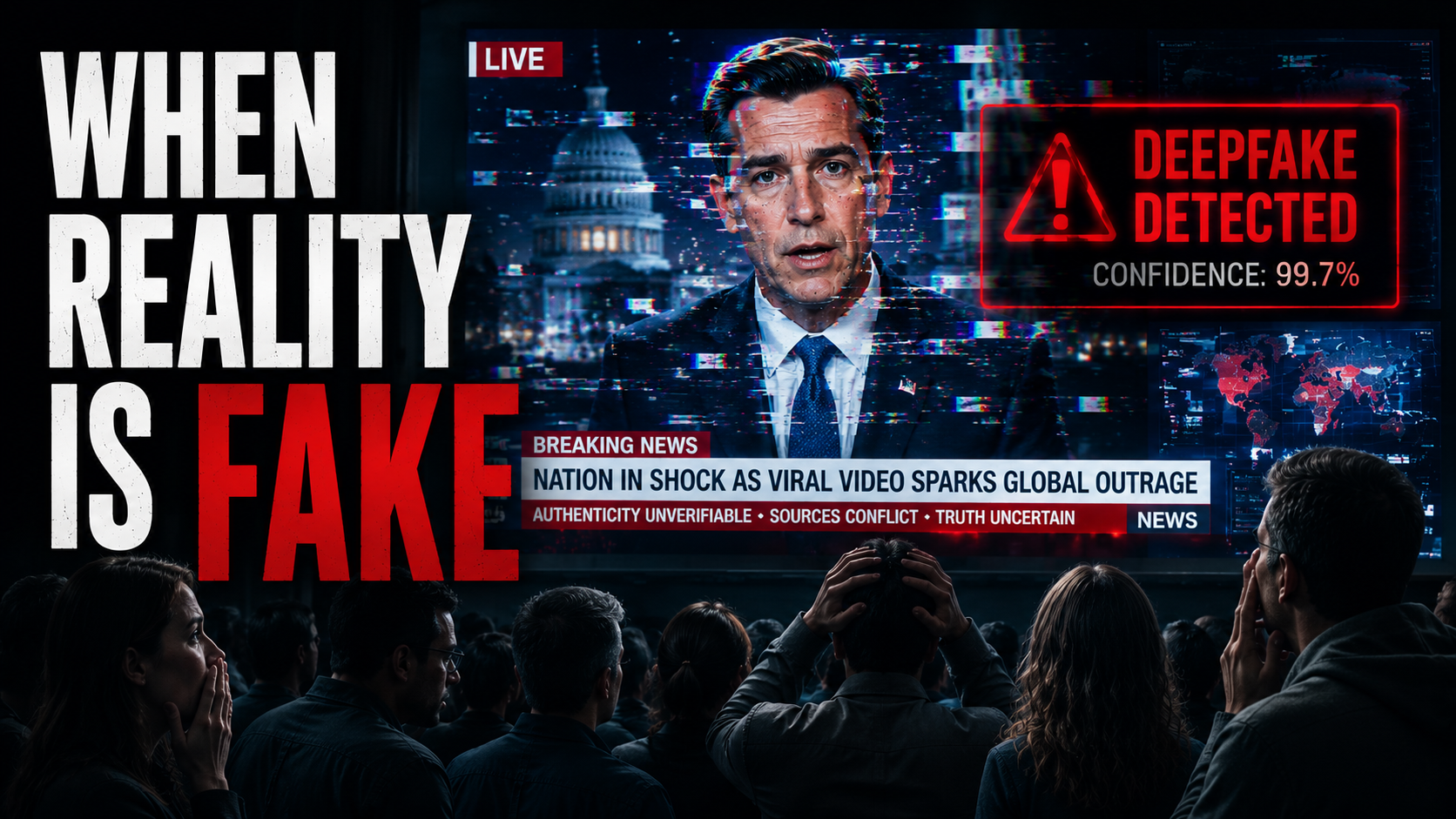
The AI Files — Episode 5: "When Reality Is Fake"
The S&P 500 opens limit down ten percent and is immediately halted.
A tech CEO selling state secrets to Russian oligarchs. Two pharmaceutical chiefs bribing senators with gold in Panama. A banking director on a yacht with cartel leaders, explaining how to launder hundreds of millions through corporate treasury accounts. Each video stamped with Tanshu IP addresses. Each one spreading faster than any platform can contain.
Harper Lane watches corporate America eat itself in real time, her fingers hammering the refresh key.
DAII's deepfake detectors flag inconsistencies across every clip. Real and fabricated look identical. Either someone has built the most sophisticated deepfake engine in history — or they are using the same infrastructure that creates authentic footage to manufacture the fakes.
Tanshu's state media says nothing. No denials. No counter-accusations. Radio silence across every diplomatic channel.
Eve watches the silence and arrives at the question the episode spends its runtime answering: what if Tanshu isn't doing this at all?
The AI Files is a scripted AI thriller podcast — fully produced audio drama built to be heard. Episode 5, When Reality Is Fake, is the series at its most geopolitically expansive: a story about a CEO who didn't just build a weapon but positioned himself as the only person who could stop it, and a world that rewarded him for both.
The Premise
Gregory Hallow, CEO of Fortisyn Technologies — America's seventeenth largest company, its primary military AI supplier, defense contractor to the G10 — didn't plan the leak. The original footage is real. He was there. He said what he said.
What he planned was the response.
When the footage breaks, Hallow's PR director Victoria Sterling walks into the boardroom and delivers one instruction: don't fight the footage. Weaponize it. Claim deepfake. Claim Tanshu fabricated the footage to destroy Western confidence in its own defense supplier. Then flood the zone — release dozens of obviously fake Hallow videos, each immediately disprovable by alibi, until the media assumes everything including the real footage is synthetic. Then expand: generate deepfakes of three hundred Fortune 500 C-suite executives, scatter them simultaneously, and let corporate America spend the next seventy-two hours drowning in fabricated scandals while Fortisyn positions its ClarityScan verification software as the only tool that can restore order.
To power the deepfake tsunami fast enough, Whitly takes Fortisyn's DDS monitoring servers offline. National security infrastructure, offline. To manufacture a crisis large enough to sell the solution.
When DAII traces the operation through Lucian Kade's backdoor into Fortisyn's systems, the evidence is unambiguous — payment authorizations to seventeen deepfake production companies, shell corporations across Panama, Zurich, and Montenegro, communication logs coordinating with Tanshu officials months before the original leak. Zou Chenglei meets Eve in a Dupont Circle tunnel at 5AM and hands her the intelligence that fills in the rest: Fortisyn signed an exclusive defense partnership with Tanshu weeks before the scandal, unlimited funding in exchange for priority access to every military-grade AI system, including those still in beta that the US government cannot access.
Hallow didn't sell out under pressure. He planned the entire architecture. The scandal, the solution, the monopoly on verification — all of it designed to make Fortisyn indispensable to every government, media outlet, and corporation on earth.
When DAII creates their own deepfake confession and plays it to Hallow in his Manhattan boardroom, he laughs. Not because he's nervous. Because they've just proven his point.
You've just demonstrated why the world needs Fortisyn's verification services more than ever.
His ClarityScan software runs both confessions on primetime television. Both flag synthetic. Seventy-three percent of the public now views Fortisyn as the definitive source for content verification. The Pentagon calls Mercer. Defense contracts worth two hundred billion over the next decade. NATO allies scrambling to license the technology. The government doesn't want Hallow prosecuted.
They want him as an ally.
The Thematic Question
When Reality Is Fake is the series at its most structurally precise because the crime it depicts has no clean victim and no clean villain. Hallow broke laws, betrayed his country, engineered a financial crisis, and took national security infrastructure offline to power a disinformation campaign. He also built the most effective content verification system in existence, reduced a genuine geopolitical threat, and delivered results that every government in the NATO alliance now depends on.
Zou delivers the episode's verdict in a dimly lit wine bar on Wisconsin Avenue, swirling a California Zinfandel he'd rather not be drinking.
Hallow didn't just create a verification monopoly. He built the perfect blackmail machine. Authentic footage — of senators, European defense ministers, anyone with something to hide — can now be released publicly and immediately declared synthetic by the only software governments trust. The subjects know it's real. The public believes the software. That is not a security vulnerability. That is leverage with no ceiling.
ARIC states what no one wants to say directly: truth is no longer discovered. It is manufactured. When verification becomes centralized under one entity, reality becomes whatever that entity declares.
Voss's response — document everything, wait for him to overreach, the system works slowly but it works eventually — is the closest the episode comes to resolution. It does not feel like comfort.
Eve's closing line in that wine bar, delivered quietly into a glass of wine she can no longer taste, is the one the episode earns:
Let them fight for power, for control, for their so-called reality. I'll fight for the truth. And when it's over, the future won't belong to them. It'll belong to those strong enough to protect it.
Whether she believes it is left to the listener.
Episode Facts
Why Listen
Most disinformation thrillers end with the exposure. When Reality Is Fake ends with the exposed man signing defense contracts worth two hundred billion dollars and seventy-three percent of the public trusting his software above every other source on earth.
This is the episode about what happens when the most dangerous actor in the room is also the most useful one — and the institutions designed to stop him decide, rationally and deliberately, to keep him instead.
Zou's final warning, delivered over wine he's drinking as a diplomatic gesture, is one of the coldest lines in the series. ARIC's suggestion that DAII manufacture its own deepfake to fight back — and Eve's decision to approve it — is one of the most morally compromised moments the show has produced.
Neither resolves cleanly. Both stay with you.
The AI Files is available now on all major podcast platforms.
Listen now
New episodes, briefings, and stories.

![EP1: OVERRIDE [Trailer]](https://storage.ghost.io/c/bc/2b/bc2b04ab-97f6-4daf-a039-3dd22edbb7ee/content/images/size/w1140/2026/05/EP1-YT-IMAGE.png)