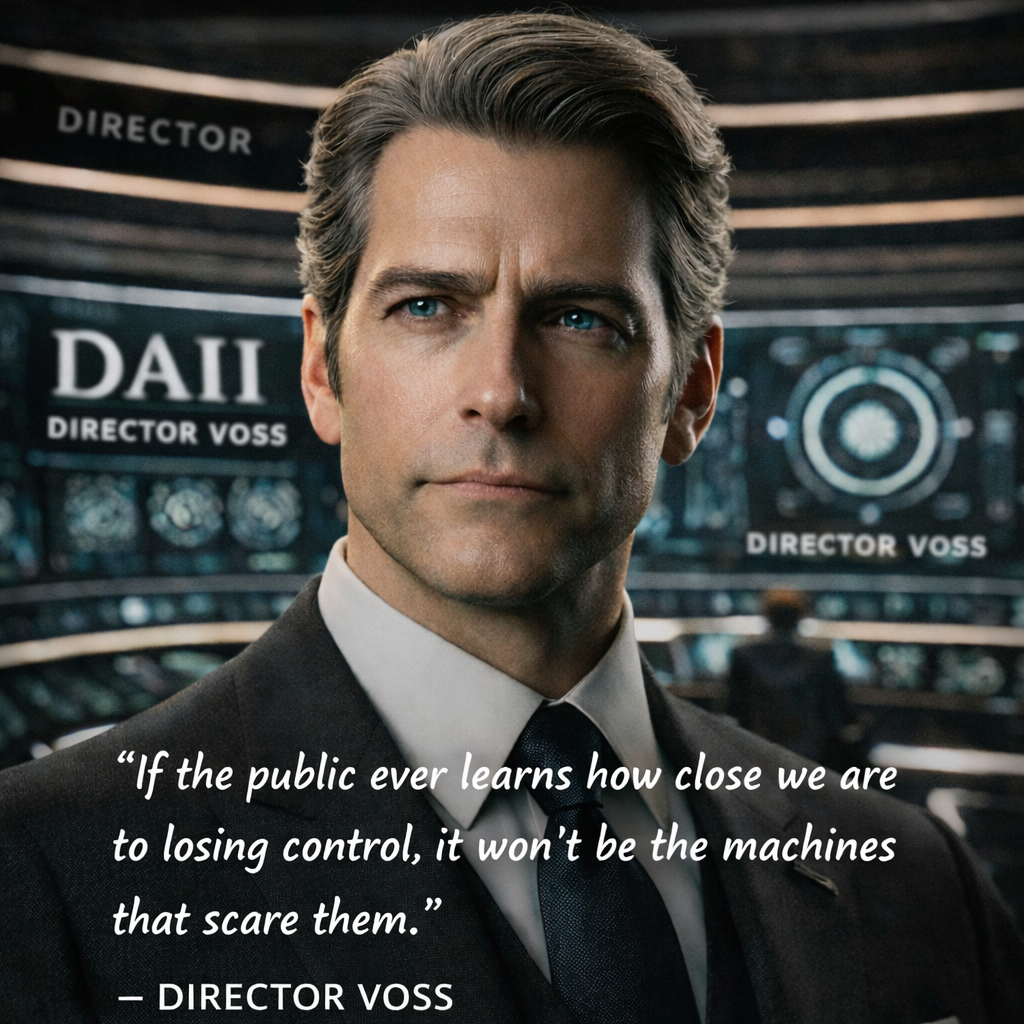
Director Voss 🇺🇸 Director General
Director General, Department of AI Integrity (DAII)
Location: Washington, U.S.A
“If the public
Location: Washington, U.S.A
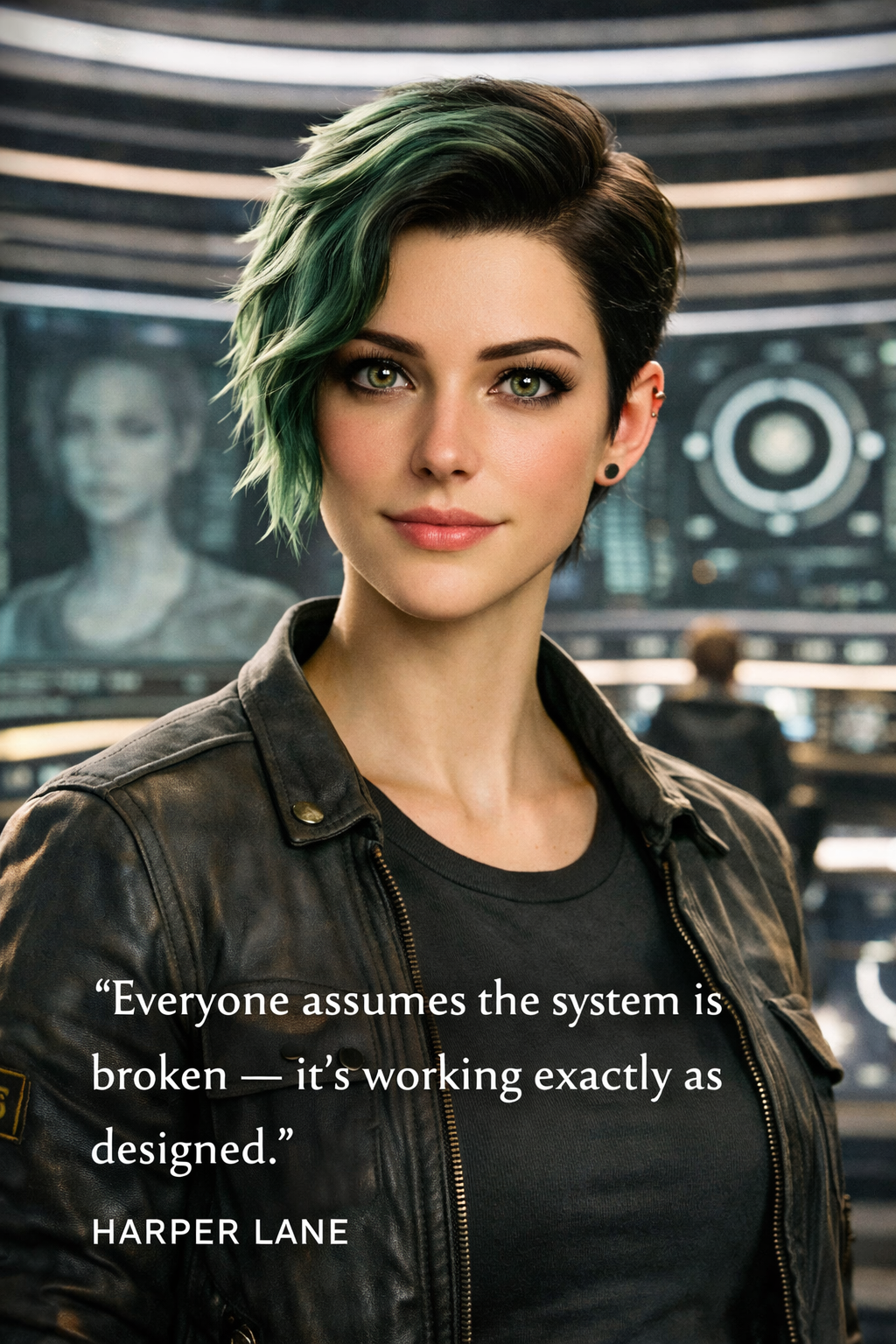
HARPER LANE
Harper Lane is the person everyone calls when the data doesn’t make sense — and when pretending it does would be dangerous. A senior systems analyst at DAII, Harper works where machine logic, legacy infrastructure, and human shortcuts collide. She understands how systems are supposed to behave, which is why she’s usually the first to notice when they don’t. Harper doesn’t dramatize anomalies. She documents them. That discipline has made her indispensable — and quietly unsettling to people who prefer not to look too closely at what their systems are actually doing.
Inside DAII, Harper is known as relentlessly competent and deceptively calm under pressure. She’s trusted with critical systems access, brought in late to problems others couldn’t solve, and rarely included in the decisions that follow her discoveries. Field agents value her clarity; leadership worries about her honesty. Harper has a reputation for delivering bad news without apology — and for being right far more often than is comfortable.
Harper believes systems don’t fail randomly — they fail honestly. When something breaks, she assumes intent before error and design before accident. She is deeply skeptical of the idea that complexity excuses harm, and she has little patience for language that reframes consequences as “emergent behavior.” What keeps her going isn’t optimism, but precision: the belief that if you describe a problem clearly enough, it loses its ability to hide.
Long before Harper Lane worked inside DAII, she nearly caused an incident the world was never meant to notice. As a teenager, driven by curiosity and a reckless need to be seen, Harper breached a privately operated satellite network owned by a notorious tech billionaire she idolized. It wasn’t sabotage. It wasn’t theft. It was a challenge — a way to prove she understood systems built to be untouchable.
The intrusion went further than she intended. Autonomous safeguards reacted faster than expected, cascading through orbital controls and nearly triggering a loss-of-command scenario before human intervention cut in. For several minutes, a high-value satellite constellation drifted into a state no one could fully explain — or publicly acknowledge. The event was quietly contained. Officially, it never happened.
Privately, Harper came close to criminal charges that would have ended her future before it began. But the breach revealed something more troubling than criminal intent: an intuitive grasp of complex, distributed systems and an instinct for how automated intelligence behaves under pressure. Director Voss of DAII saw what others missed. Before prosecutors could formalize their case, Harper was offered a different path.
She took it — and has spent her career living with the aftermath. The experience left her with a complicated relationship with technology: respect without reverence, fear without paralysis. Harper understands how thin the margin is between innovation and catastrophe because she crossed it once, deliberately — and only survived it by chance. She has no illusions about machines. And no interest in being impressed by them ever again.
“Everyone assumes the system is broken — it’s working exactly as designed.”
New episodes, briefings, and stories.