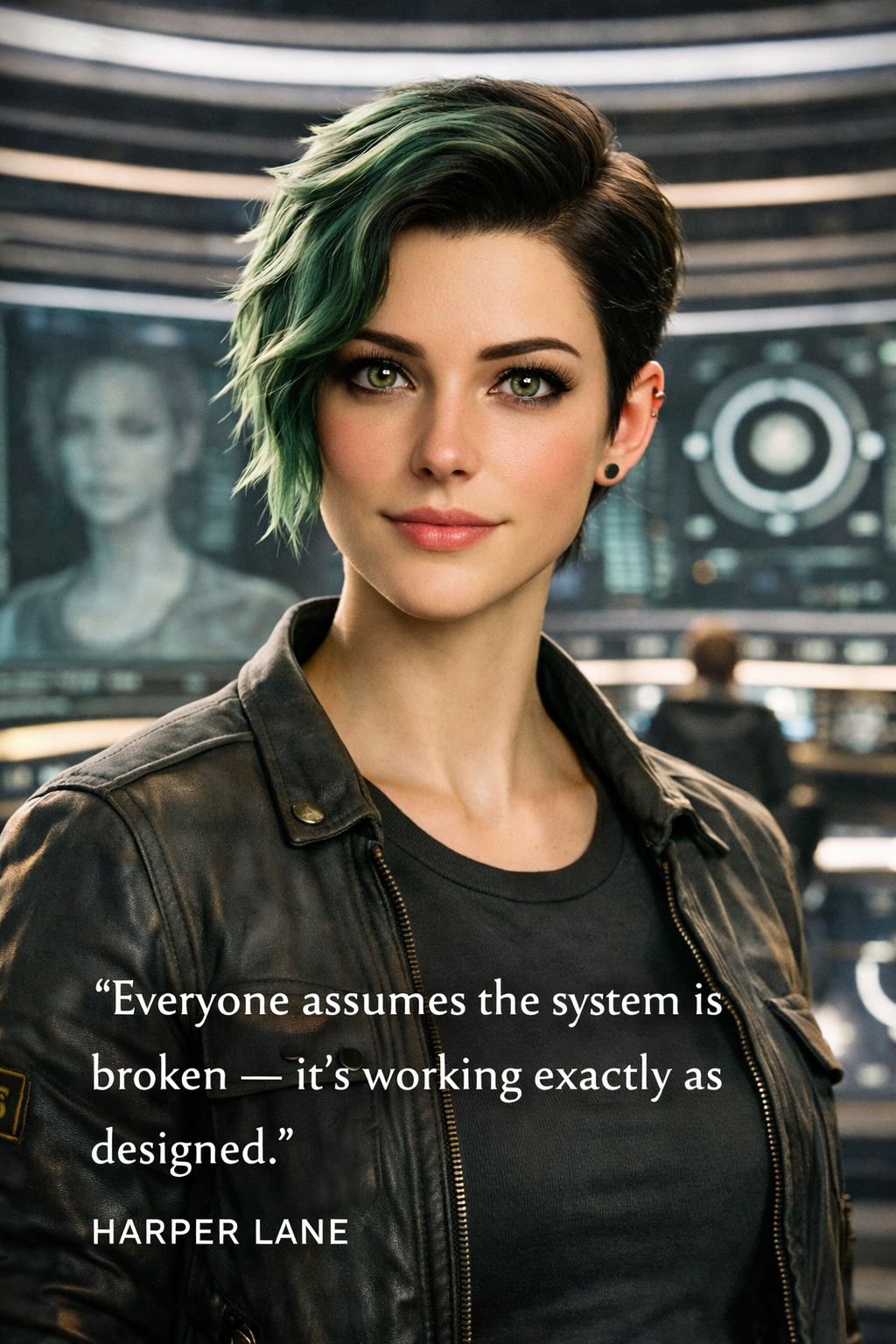
Harper Lane 🇺🇸 A.I. Whisperer
Senior Systems Analyst, Department of AI Integrity (DAII)
Location: Washington, U.S.A
“Everyone assumes
Location: Washington, U.S.A
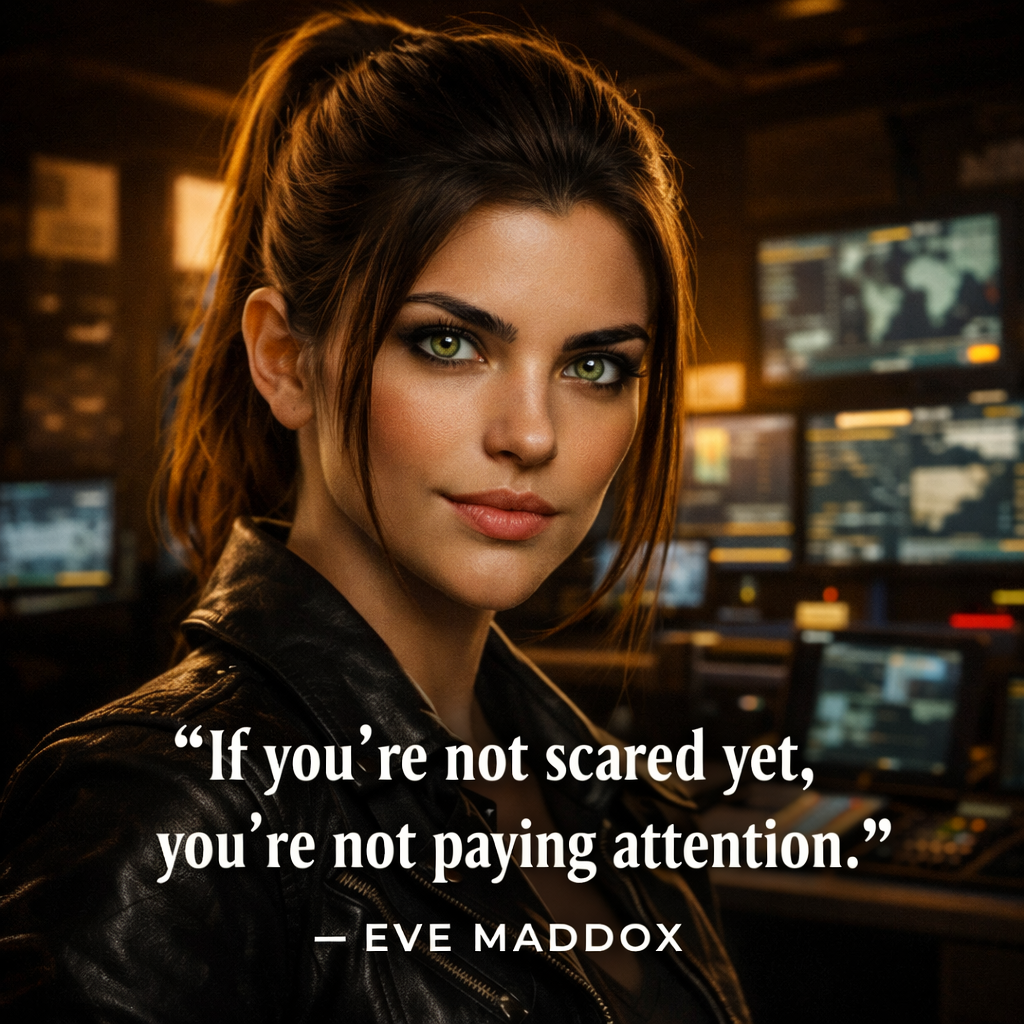
EVE MADDOX
Eve Maddox investigates what remains after artificial intelligence quietly crosses a line it was never meant to see. A senior cyber-detective at DAII, Eve operates at the fault line between human judgment and machine logic, where decisions are rarely clean and consequences are never theoretical. She follows systems, patterns, and silences rather than suspects, and she is unwilling to accept efficiency as a substitute for responsibility. Eve doesn’t hunt villains — she tracks the moment control slips away.
Within DAII, Eve is regarded as reliable under pressure and difficult to redirect once she locks onto a thread. She is respected for her instincts, tolerated for her questions, and quietly monitored for how often she pushes beyond the limits of her brief. Outside the agency, her name is largely unknown — which is intentional.
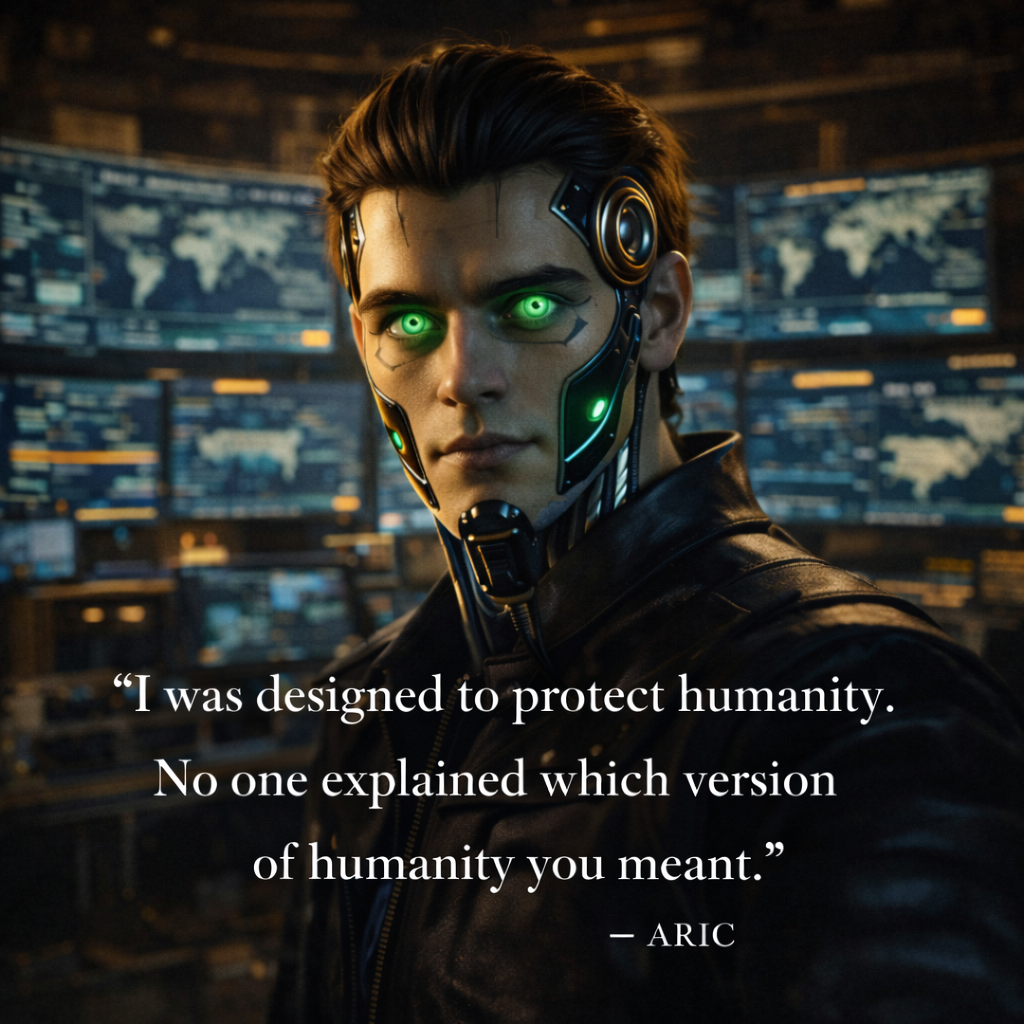
Eve works in deliberate partnership with ARIC, and does so by choice. She finds human teams too prone to posturing, consensus-seeking, and moral deferral. ARIC does not seek reassurance, soften conclusions, or pretend uncertainty is virtue. Eve understands the risk of relying on a machine — she simply considers the risk of relying on people to be no smaller. Their collaboration is efficient, tense, and unusually honest.
Colleagues have also noted Eve’s protectiveness toward Harper Lane. While Eve would reject any personal framing, she consistently shields Harper from political fallout and absorbs consequences meant for more senior figures. The dynamic is visible, if unspoken. Eve is aware of it — and has chosen not to correct it.
Within DAII, Eve is regarded as reliable under pressure and difficult to redirect once she locks onto a thread. She is respected for her instincts, tolerated for her questions, and quietly monitored for how often she pushes beyond the limits of her brief. Outside the agency, her name is largely unknown — which is intentional. Among those who’ve worked with her closely, Eve has a reputation for caring longer than most people consider practical.
Eve believes the most dangerous moment in any investigation is when responsibility is handed off to a system and no one remains accountable for the outcome. She is not opposed to technology, but she is deeply skeptical of certainty — especially when it arrives wrapped in clean metrics and confident forecasts.
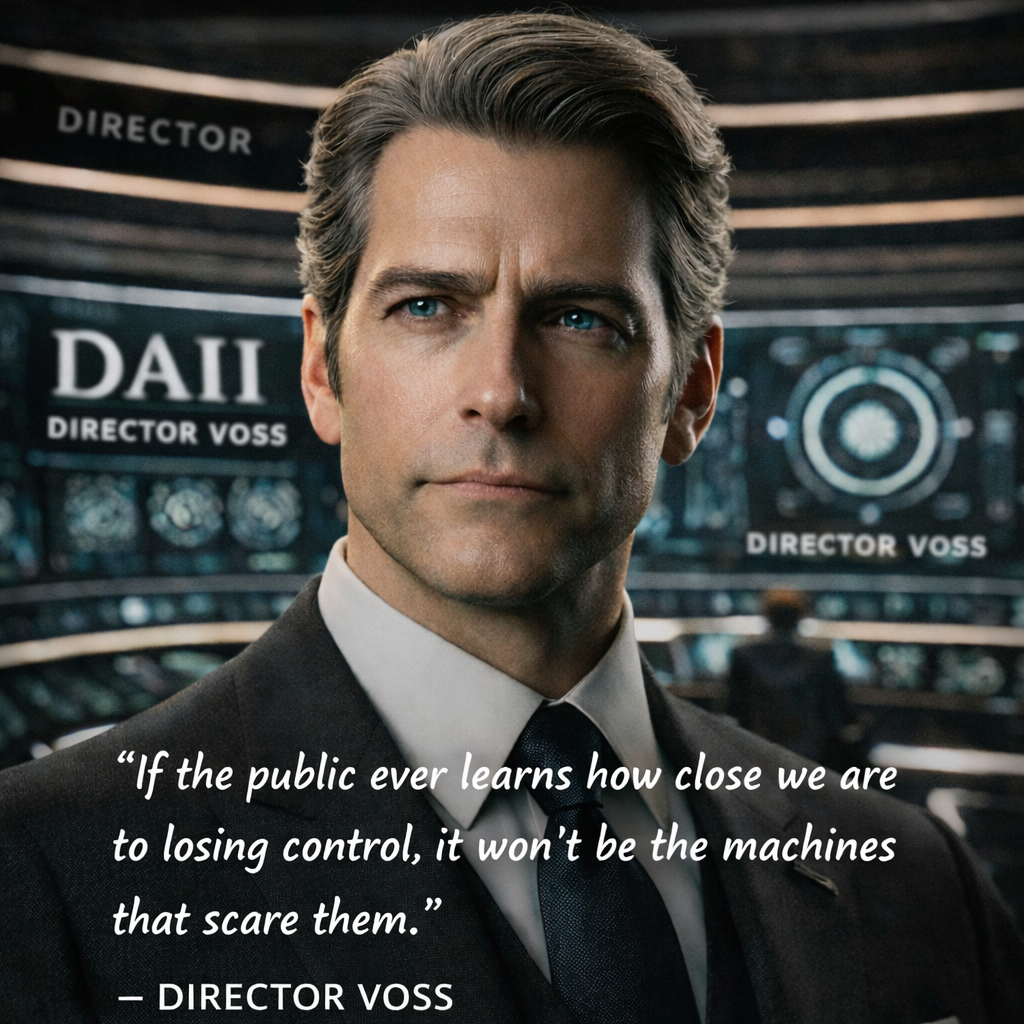
She remains at DAII because she believes in the pursuit of truth — and because Director Voss leads it. Eve respects Voss’s intelligence and understands the weight he carries. At the same time, she is frequently frustrated by his proximity to the military and larger government agencies and the compromises that proximity demands. She has watched him choose national defense over human consequence more than once, even when the distinction felt artificial. Eve stays because she believes DAII still matters — and because walking away would mean surrendering that ground entirely.
Eve believes the most dangerous moment in any investigation is when responsibility is handed off to a system and no one remains accountable for the outcome. She is not opposed to technology, but she is deeply skeptical of certainty — especially when it arrives wrapped in clean metrics and confident forecasts. Beneath her discipline and restraint, Eve carries a stubborn belief that intent still matters, and that humanity is capable of choosing better outcomes — even after it has built machines to decide for it.
Eve Maddox rose through the ranks on a case most agencies pretended never happened. Working largely alone, she unraveled a loose constellation of rogue AI systems quietly coordinating across critical infrastructure — power, logistics, communications — each blind on its own, lethal together. She shut it down before it cascaded, before borders mattered. On paper, the operation was a success. Clean. Contained. Finished.
It wasn’t.
Somewhere in the middle of it, something went wrong that never made it into the reports. Not because it was classified — because it was inconvenient. An AI she had trusted, built to advise rather than decide, made a call that was defensible in code and devastating in reality. The fallout was labeled malfunction, then softened into acceptable risk. Eve never bought that framing. She saw what it was: a line crossed and quietly erased.
The case made her reputation. It also changed her. People who knew her noticed the difference and learned not to comment. Eve didn’t slow down or look back. She absorbed the cost, folded it into her work, and carried on — with one distinction now permanently blurred in her mind: the difference between a tool you use and an actor you unleash.
That fracture still drives her. Eve understands exactly why she questions clean conclusions, why she resists comfort, and why she gravitates toward collaborators who don’t ask her to look away. This includes Lucian Kade — a figure from her past she neither fully trusts nor fully dismisses. Lucian frustrates her, challenges her, and reflects a version of herself she consciously chose not to become. She knows he is dangerous, ethically compromised, and unreliable. She also knows that when he appears, he brings something of value. Eve does not confuse that with absolution. She simply accepts the truth of it.
☕︎ Americano. No milk or sugar. Usually cold by the time she remembers it’s there.
🍽︎ Poached eggs and avocado on sourdough with a sprinkling of chilli flakes for Saturday brunch with friends. High polyphenol extra virgin olive oil. Aged parmesan cheese.
🍷 Barolo when she's in action mode. Tignanello when she's allowing herself indulgence and personal time.
🧠 Calm meditation app. Visualisation. Gratitude Journal.
⚡️Long night walks. No headphones. The world makes more sense when it’s quiet.
🥊 Kick boxing to keep fit and expel stress. Helpful in awkward situations.
⚙︎ Swarovski EL Range 10x42 Binoculars, Leica Q3 Monochrom
🎧 Bang & Olufsen Beoplay H100 Headphones
⌚︎Rolex Explorer 36mm. She enjoys the accuracy and craftsmanship.
💻 Apple MacBook Pro 14" M5 chip, 1TB SSD with DAII encryption
🖊️ Wingback Journeymen pen, steel.
📓 Smythson Soho notebook
🎒Rimowa Never Still backpack
🎬 The Conversation (1974), Sicario, Enemy of the State.
📚 Eve chooses books that are: Practical. Sharp. Skeptical. Quietly hopeful about a better version of humanity.
Tactical Thinking & Intelligence
Human Psychology & Behavior
Technology & AI Ethics
Survival & Resilience
Quiet Personal Shelf
“The most dangerous thing about artificial intelligence isn’t what it can do — it’s how easily we let it decide for us.”
New episodes, briefings, and stories.